July 28, 2026
Truck accidents can be significantly more complicated than ordinary motor vehicle collisions because multiple parties, records, and contributing factors may be involved. A commercial truck may be operated by a driver, owned by a trucking company, maintained by another business, and loaded by a separate party. Determining who caused the crash requires a careful review of the available evidence rather than relying only on statements made at the accident scene. According to Consumer Shield, the U.S. has experienced approximately 140,000 to 165,000 semi-truck accidents annually in recent years, while trucks are involved in only about 6% of fatal crashes. These figures demonstrate the serious consequences that can result when large commercial vehicles are involved in collisions. A truck accident lawyer can investigate the circumstances surrounding a crash and identify the evidence needed to establish responsibility. Understanding how fault is proven can help injured individuals better understand the legal process after a serious collision.
Examine the Accident Scene
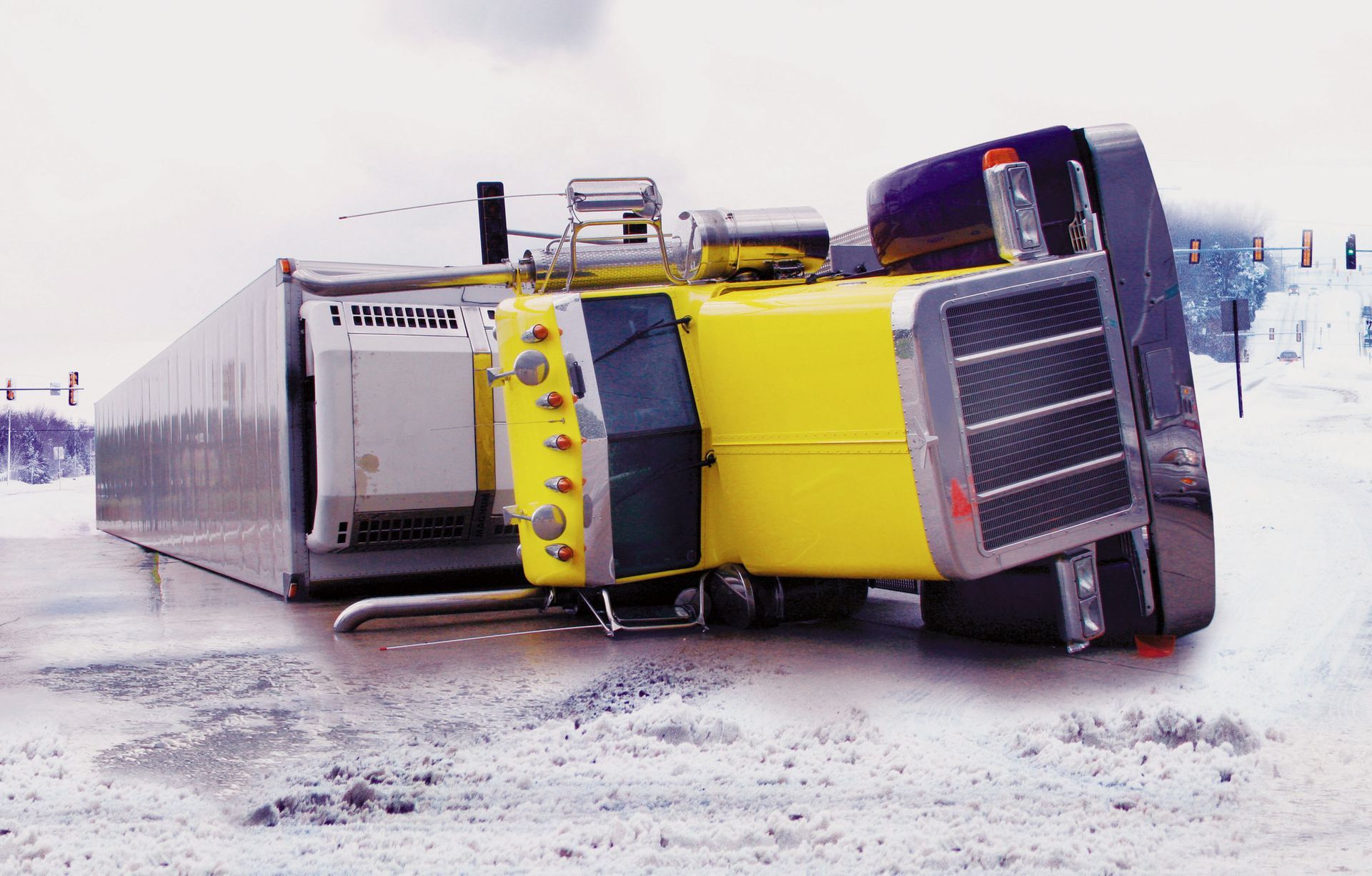
The accident scene can provide important information about how a truck collision occurred. Investigators may examine vehicle positions, skid marks, debris, road conditions, traffic signals, and damage patterns. Photographs and videos taken shortly after the collision can preserve evidence that may later disappear or change. Weather conditions, construction activity, lighting, and roadway design may also contribute to the circumstances surrounding a crash. A truck accident lawyer may use this information to reconstruct the events leading up to the impact. The location and severity of vehicle damage can also help demonstrate the direction and force of the collision. Witnesses at the scene may provide additional details about what they observed before and during the crash. A detailed examination of the accident scene can help establish a clearer timeline of events.
Review Driver Records
A commercial truck driver’s records may reveal important information about potential causes of a collision. Investigators may examine driving history, licensing information, training records, and previous safety violations. Records can also help determine whether the driver had the appropriate qualifications to operate the specific type of commercial vehicle involved. A truck accident lawyer may investigate whether the driver was properly trained for the vehicle, route, and conditions present at the time of the crash. The driver’s history may also reveal patterns of unsafe conduct that could be relevant to a negligence claim. Information about previous violations does not automatically prove that the driver caused a particular collision. However, it may provide useful context when combined with other evidence. Reviewing driver records can help identify whether inadequate training, unsafe conduct, or other concerns played a role in the accident.
Analyze Electronic Truck Data
Modern commercial trucks may contain electronic systems that record valuable information about vehicle operation. Electronic logging devices can provide information about driving hours, rest periods, and compliance with applicable requirements. Other vehicle systems may record speed, braking activity, acceleration, and other operational data. A truck accident lawyer can examine this information to determine what the truck was doing before the collision. The data may help establish whether the driver was speeding, driving for excessive periods, or failing to respond appropriately to traffic conditions. Electronic records can also help confirm or challenge statements made by drivers or trucking companies after a crash. Because this information may be stored electronically, preserving it quickly can be important. Reviewing available truck data can provide objective evidence that helps clarify the events leading to the collision.
Investigate Company Policies
Trucking companies may have responsibilities that extend beyond hiring a driver and assigning routes. Employers may be responsible for training, supervision, vehicle maintenance, scheduling, and enforcing safety policies. A truck accident lawyer may investigate whether a company encouraged conduct that increased the risk of a collision. For example, unrealistic delivery schedules could potentially create pressure to speed or drive while fatigued. Poor supervision may also allow unsafe practices to continue without correction. Investigators may review company policies, training materials, disciplinary records, and internal communications. The goal is to determine whether the employer’s conduct contributed to the accident or failed to prevent a foreseeable safety risk. Examining company practices can be especially important when the facts suggest that responsibility extends beyond the individual driver.
Review Maintenance Records
Mechanical problems can contribute to serious truck accidents, particularly when large commercial vehicles experience failures involving critical systems. Brakes, tires, steering components, lights, and other equipment must be maintained in proper working condition. A truck accident lawyer may request inspection reports, repair invoices, maintenance schedules, and other records related to the vehicle. These documents may show whether a known mechanical problem was ignored or whether required inspections were not completed. Investigators may also examine the condition of the truck after the collision for signs of mechanical failure. Maintenance records can help determine whether a trucking company, owner, or maintenance provider failed to address a dangerous condition. The evidence must be carefully connected to the accident because not every mechanical issue causes a collision. A thorough review can help determine whether inadequate maintenance contributed to the crash.
Examine Cargo Loading Practices
Improperly loaded cargo can create serious risks for drivers and other people on the road. Cargo that is too heavy, unevenly distributed, or inadequately secured may shift during transportation. This movement can affect a truck’s balance, handling, braking, and ability to remain stable. A truck accident lawyer may investigate who loaded the cargo and whether proper procedures were followed. Shipping documents, loading records, photographs, and inspection information may help reveal how the cargo was positioned before the accident. In some cases, responsibility may involve a trucking company, loading contractor, shipper, or another party. Investigators may also examine whether the cargo exceeded applicable weight limits or was secured with appropriate equipment. Identifying cargo-related problems can be essential when the accident involves a rollover, jackknife, or loss of control.
Interview Witnesses and Experts
Witness testimony can provide valuable information about what happened before, during, and after a truck collision. Drivers, passengers, pedestrians, emergency responders, and nearby business employees may have observed important details. A truck accident lawyer may interview witnesses to determine what they saw and whether their accounts are consistent with physical evidence. Expert witnesses may also help explain technical issues that are difficult for a jury or insurance company to understand. Accident reconstruction specialists can analyze vehicle damage, roadway evidence, and electronic data to develop an explanation of the collision. Medical experts may connect the accident to the injuries claimed by an injured person. Mechanical or trucking safety experts may evaluate whether equipment or industry practices contributed to the crash. Combining firsthand observations with specialized analysis can create a more complete picture of what occurred.
Analyze Insurance and Company Responsibility
Truck accident cases may involve several insurance policies and potentially multiple responsible parties. The truck may be covered by one policy, while the trucking company, cargo carrier, or other business may have separate coverage. A truck accident lawyer can investigate the relationships between the parties involved in the transportation operation. Determining who employed the driver, owned the vehicle, controlled the cargo, and managed maintenance can help identify potential sources of responsibility. Insurance companies may also conduct their own investigations soon after a collision. Early statements, recorded interviews, and settlement offers should be handled carefully because they may affect the evaluation of a claim. A detailed investigation can help determine which parties may be legally responsible for the injuries and losses involved. Understanding the insurance structure is an important part of pursuing a claim after a complex commercial truck collision.
If you or a loved one has been injured in a commercial truck collision, the details of the case should be reviewed carefully before important decisions are made. Contact Cappuccio & Zaorski, LLC today to discuss your accident and learn how a thorough investigation may help establish responsibility. Taking action promptly can help preserve important evidence and provide a clearer path forward after a devastating truck crash.